
MODEL MORE BATTLSPACE EFFECTS
Unlike other “simulators”, MACE models the entire electromagnetic spectrum (at pulse level) which effects the most important aspects of UAS operations, such as terrain effects and enemy electronic attacks (EA) on both video downlink quality and drone control datalinks, and accurate detection and engagement from Counter-UAS systems.
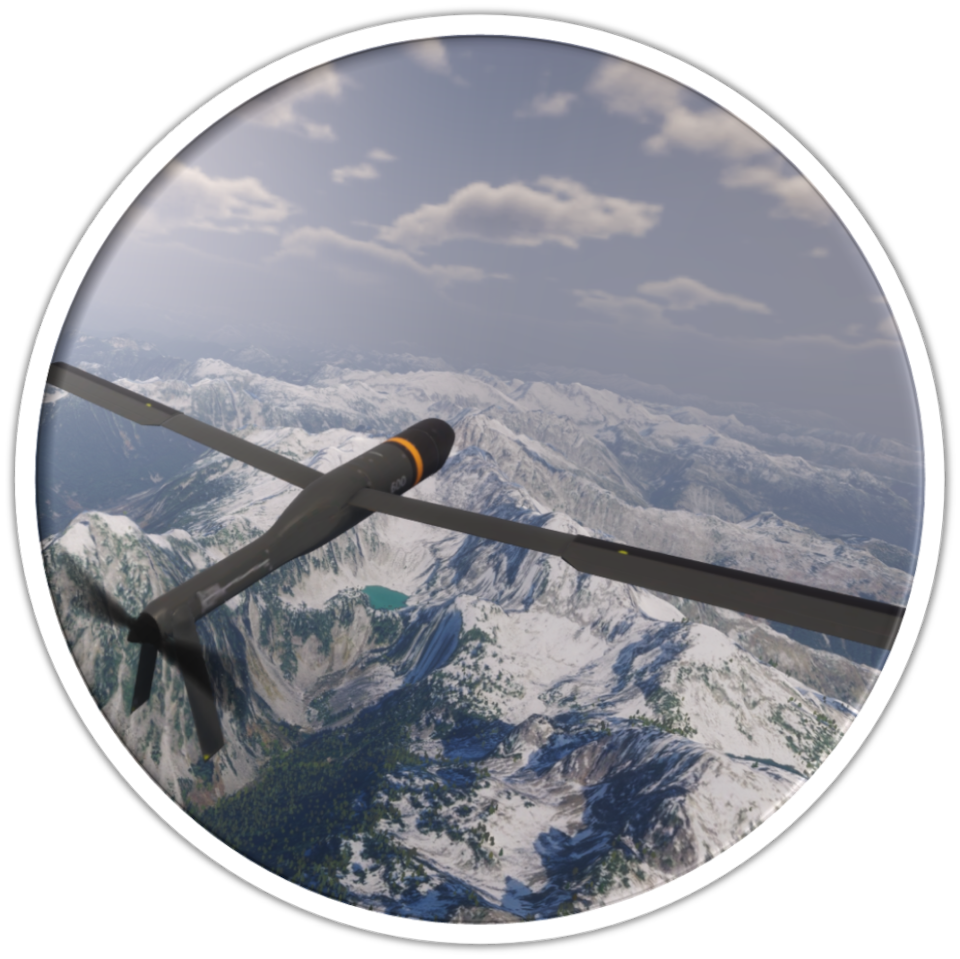
PLAN EFFECTIVE TACTICS
The MACE and ARMOR planning, analysis and rehearsal tools enable users to assess the best routes vs known jamming of datalinks and determine the optimum TTPs to operate within contested airspace and CUAS systems.
REHEARSE WITH REALISTIC CONTROLS AND VISUALS
Users can take control of the sUAS as an operator in the First Person View (FPV) using fielded real drone controls and displays to get high detail mission rehearsal. User configurable control system options enable drone-specific adjustments to the flight models and control systems that save with the mission. Real-time network monitoring enables analysts/instructors to visualize signal strengths between nodes, and the effects of enemy jamming on the various links.
Adjustable Flight Models
Level, Acro, and Autonomous mode flight models
Thrust curve adjustment
Individual propeller arm and angle adjustment
Analysis and Rehearsal
Create constructive missions to test out swarm tactics vs CUAS systems
Rehearse specific missions with actual FPV controls and displays

Counter UAS
Modelling of EM CUAS, and Kinetic CUAS systems
Physical weapon tracking – first person UAS engagement with CUAS weapons
Featured Products

Full-spectrum battlespace simulation software for building and executing scenarios across multiple domains, simulated in high detail including pulse level electromagnetic spectrum modeling.

Worldwide scale Unity based 3D visual image generator. Interact with the simulation from any perspective; from first-person control to table-top planning. Use multiple visual systems from screens and multichannel systems and extending to virtual and mixed reality. Generate terrain anywhere in the world without any prior GIS expertise.